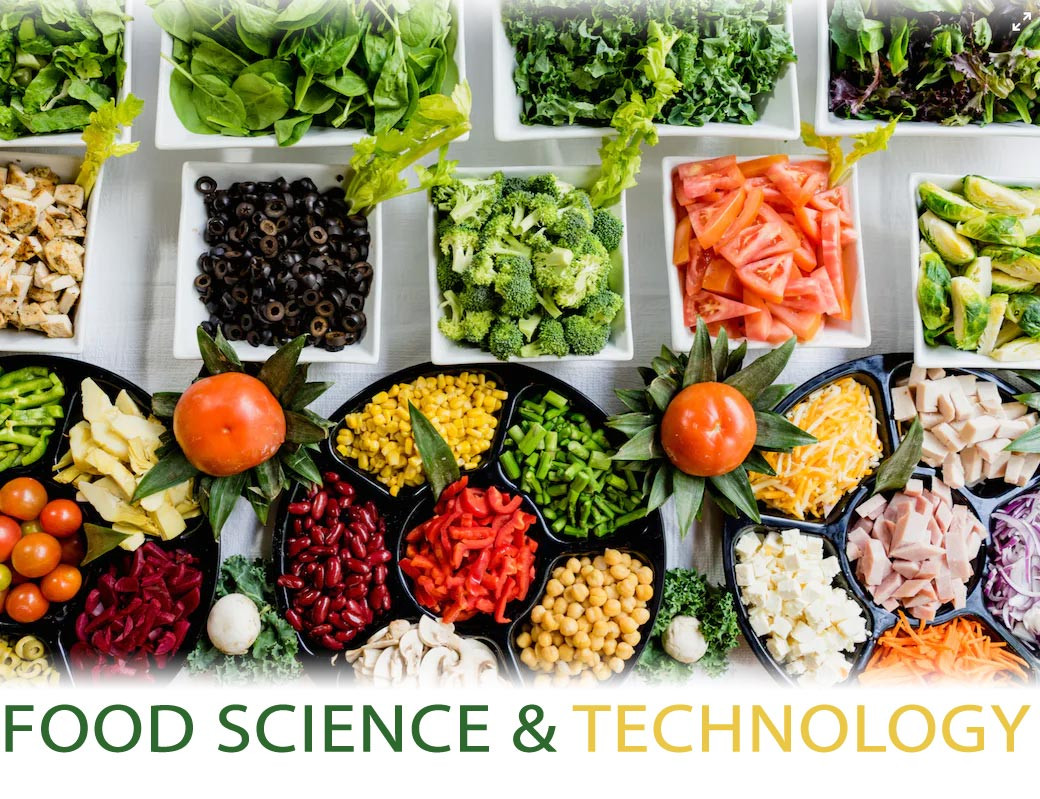
Throughout this course, students will build a strong foundation in food composition, properties, and behavior while applying scientific principles to ensure quality, safety, and value addition through topics like food composition, microbiology, preservation, quality assuranceand safety standards.
- Lecturer: Anastasie MUTUYEMARIYA

This module provides an in-depth understanding of how economic principles can be applied to the efficient use and management of natural resources. It explores the economic theories and analytical tools necessary to address issues related to resource allocation, sustainability, and conservation. The course examines both renewable resources (such as fisheries, forests, and water) and non-renewable resources (such as minerals and fossil fuels), emphasizing the balance between economic development and environmental preservation.
- Lecturer: Drocelle NYIRANSABIMANA
This course examines key development issues affecting societies across the world, with a particular focus on economic, social, political, and environmental challenges in developing and developed regions. Students explore topics such as poverty, inequality, population growth, education, health, gender issues, urbanization, globalization, and sustainable development. The course encourages critical analysis of the causes and impacts of development disparities, using real-world case studies and comparative perspectives. By the end of the course, students will develop a deeper understanding of global development challenges and be able to evaluate policies and strategies aimed at promoting equitable and sustainable development.
- Lecturer: Drocelle NYIRANSABIMANA

The course of Evaluation of Agricultural Projects introduces undergraduate students to the principles, methods, and tools used to assess the design, implementation, performance, and impact of agricultural development projects. It equips students with analytical skills necessary to determine whether agricultural projects achieve their intended objectives efficiently, effectively, sustainably, and with meaningful impact on target beneficiaries.
The course begins with an overview of the agricultural project cycle, including project identification, formulation, appraisal, implementation, monitoring, and evaluation. It explores different types of evaluation: ex-ante, mid-term, terminal, and ex-post evaluations and distinguishes between monitoring and evaluation functions within agricultural development programs.
Students learn key evaluation criteria such as relevance, effectiveness, efficiency, impact, and sustainability.
The course also covers quantitative and qualitative evaluation methods, including cost-benefit analysis, cost-effectiveness analysis, logical framework analysis, stakeholder analysis, survey methods, and participatory evaluation approaches.
The course begins with an overview of the agricultural project cycle, including project identification, formulation, appraisal, implementation, monitoring, and evaluation. It explores different types of evaluation: ex-ante, mid-term, terminal, and ex-post evaluations and distinguishes between monitoring and evaluation functions within agricultural development programs.
Students learn key evaluation criteria such as relevance, effectiveness, efficiency, impact, and sustainability.
The course also covers quantitative and qualitative evaluation methods, including cost-benefit analysis, cost-effectiveness analysis, logical framework analysis, stakeholder analysis, survey methods, and participatory evaluation approaches.
- Lecturer: Juvenal SINGIRUMUKIZA