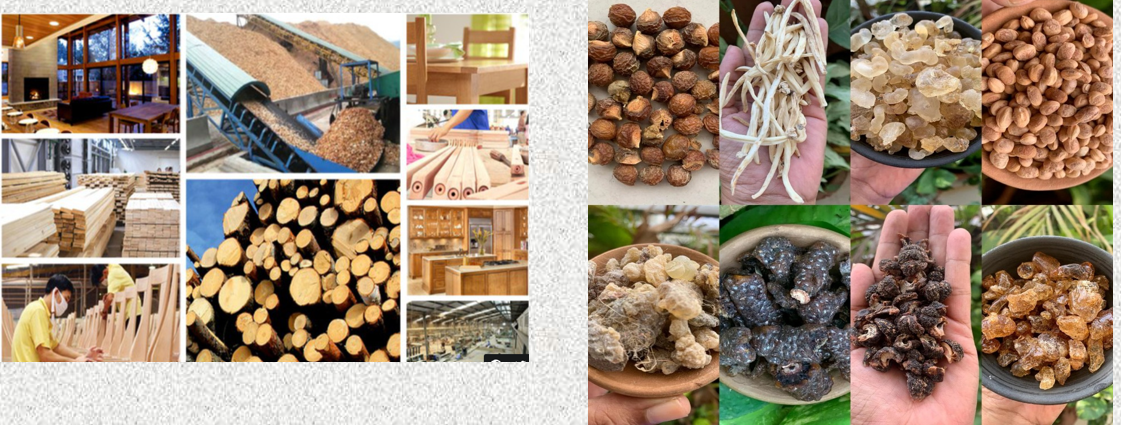
This course provides students with a comprehensive understanding of forest products, their classification, processing techniques, and the marketing systems that support sustainable forest-based industries. Students learn to identify wood and non-wood forest products, understand their economic, environmental, and social importance, and analyze how they move through value chains. The course also covers logging operations, harvesting planning, ergonomics in forestry work, and safety standards. By the end, students gain the knowledge and skills required to support sustainable production, value addition, and responsible marketing of forest products.
- Lecturer: Dr. UWINGABIRE Solange
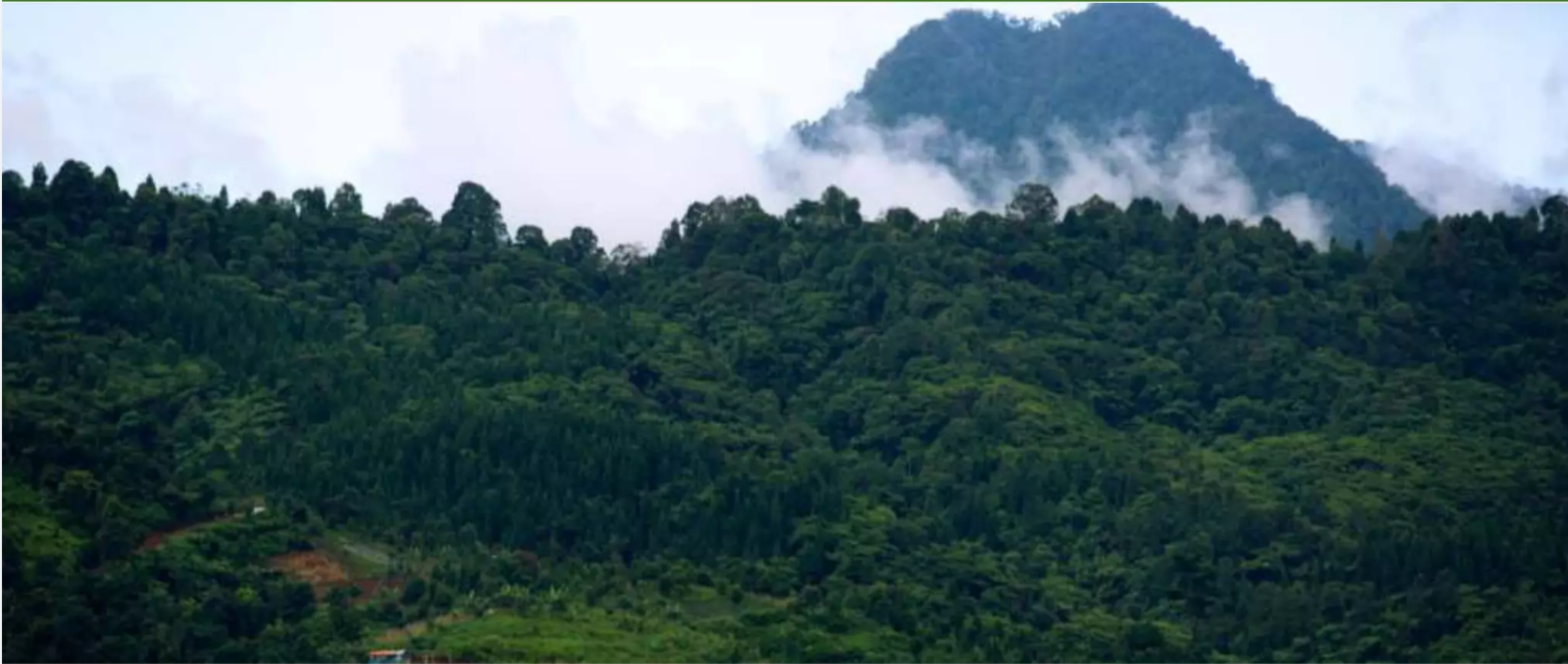
This course provides a foundational understanding of forestry and agroforestry systems, emphasizing their ecological, social, and economic roles. It covers the full lifecycle of tree and shrub management—from seed selection and nursery practices to harvesting, sustainable utilization, and ecosystem service provision.
Students will explore the integration of trees with crops and livestock in agroforestry systems, alongside traditional forest management approaches. The course emphasizes practical applications, including species selection, soil and water conservation, and sustainable management practices, while addressing contemporary challenges such as climate change mitigation and biodiversity conservation. Designed as an introductory course with no prerequisites, it is suitable for students from all majors who wish to gain insights into sustainable land-use practices and the role of trees in resilient food and environmental systems.
Students will explore the integration of trees with crops and livestock in agroforestry systems, alongside traditional forest management approaches. The course emphasizes practical applications, including species selection, soil and water conservation, and sustainable management practices, while addressing contemporary challenges such as climate change mitigation and biodiversity conservation. Designed as an introductory course with no prerequisites, it is suitable for students from all majors who wish to gain insights into sustainable land-use practices and the role of trees in resilient food and environmental systems.
- Lecturer: Dr. UWINGABIRE Solange