Teaching Geography involves using various methods that make learning geographical concepts engaging, practical, and understandable. Since Geography deals with both the physical and human environment, it requires learners to develop theoretical knowledge as well as practical skills through observation, investigation, measurement, analysis, and field experiences.
Commonly used Geography teaching methods include lecture, discussion, demonstration, project work, fieldwork, observation, inquiry-based learning, question-and-answer, and map-reading exercises. Each method is selected according to the topic being taught, learners’ abilities, the learning objectives, and the available resources. For instance, fieldwork enables learners to observe geographical features and human activities in their natural environment, while map-reading exercises help them develop skills in interpreting maps, symbols, scales, and spatial patterns.
Commonly used Geography teaching methods include lecture, discussion, demonstration, project work, fieldwork, observation, inquiry-based learning, question-and-answer, and map-reading exercises. Each method is selected according to the topic being taught, learners’ abilities, the learning objectives, and the available resources. For instance, fieldwork enables learners to observe geographical features and human activities in their natural environment, while map-reading exercises help them develop skills in interpreting maps, symbols, scales, and spatial patterns.
- Lecturer: Evangeline IRAKOZE
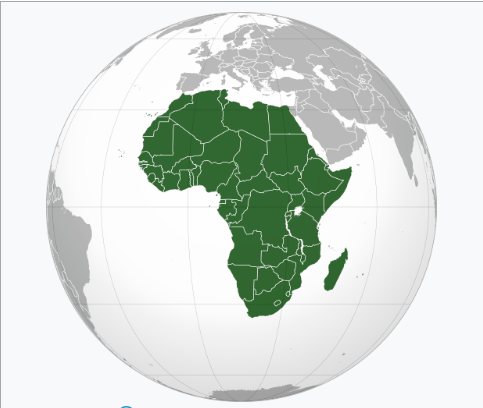
Natural resource management issues are inherently complex. They involve the ecological cycles, hydrological cycles, climate, animals, plants and geography, etc. All these are dynamic and inter-related. A change in one of them may have far reaching and/or long term impacts which may even be irreversible. In addition to the natural systems, natural resource management also has to manage various stakeholders and their interests, policies, politics, geographical boundaries, economic implications, etc. The management of natural resources over large spatial scales is inherently complex due to numerous biophysical and socioeconomic factors and the uncertainty associated with environmental systems and human behavior.
- Lecturer: Angel NIWAMANYA
- Lecturer: FELICIEN NIYONIRINGIYE
Welcome remarks
Hello everyone, and a very warm welcome to our Climatology module!
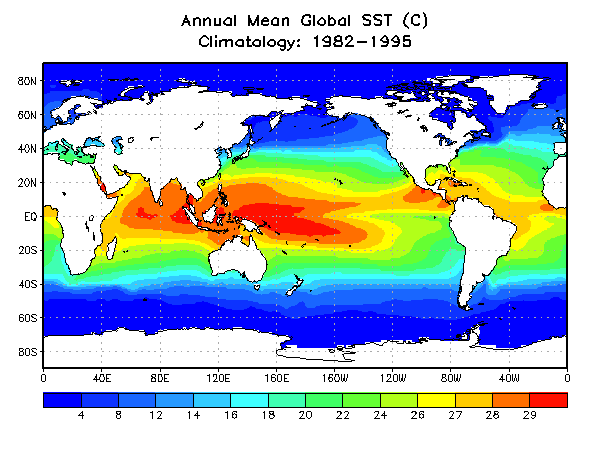
Over the course of our studies together, we will journey through the dynamic and vital science of Earth’s atmosphere. We will explore the processes that create our daily weather, the patterns that define the world’s major climate zones, and the profound ways in which climate shapes our ecosystems, economies, and societies – and how human activities are now reshaping the climate in return.
From the driving forces of the global circulation to the regional impacts of monsoons and droughts, and from the evidence of past ice ages to the cutting-edge models of future change, this module will help you understand not just what the weather is, but why our climate is changing and what it means for our planet. I encourage you to stay curious, connect the science to the world around you, and join me in exploring one of the most critical challenges of our time. Let's get started.
Module Aim
This module aims to provide students with a scientific understanding of the Earth’s climate system, its spatial and temporal variability, and its interactions with the biosphere and human societies. By examining the physical principles of climatology, the classification of global climates, and the dynamics of climate change, the module seeks to equip students with the analytical tools to interpret climate data, assess past and future trends, and evaluate the environmental and societal implications of a changing climate.
Module Objectives
Upon completion of this module, students will have achieved the following objectives:
• To explain the fundamental physical processes that govern the climate system, including radiation balance, atmospheric circulation, and the hydrological cycle.
• To identify and describe the major global climate zones using classification schemes (e.g., Köppen) and the controlling factors behind their spatial distribution.
• To analyse the mechanisms and evidence of natural climate variability (e.g., orbital cycles, volcanic forcing, El Niño-Southern Oscillation) versus anthropogenic climate change.
• To evaluate the observed and projected impacts of climate change on physical systems (cryosphere, oceans) and human systems (agriculture, health, migration).
• To critically assess the science, policy, and communication dimensions of climate change mitigation and adaptation strategies at local, regional, and global scales.
Module Learning Outcomes
By the end of this module, students will be able to:
• Describe the key components of the climate system and explain the physical principles underlying atmospheric motion, energy transfer, and precipitation.
• Interpret climate data, graphs, and maps (e.g., temperature anomalies, paleoclimate records, model projections) to identify spatial patterns, trends, and extreme events.
• Classify and compare the climates of different world regions, linking climate characteristics to the interactions of latitude, altitude, ocean currents, and land-sea distribution.
• Critically analyse the evidence for human-induced climate change and distinguish between natural variability and long-term anthropogenic forcing.
• Evaluate the effectiveness of various adaptation and mitigation measures in addressing climate-related risks, with reference to specific case studies and sustainability goals
Course Structure Overview
Dr. OWINO James
james@utab.ac.rw
0732914067
Hello everyone, and a very warm welcome to our Climatology module!
Over the course of our studies together, we will journey through the dynamic and vital science of Earth’s atmosphere. We will explore the processes that create our daily weather, the patterns that define the world’s major climate zones, and the profound ways in which climate shapes our ecosystems, economies, and societies – and how human activities are now reshaping the climate in return.
From the driving forces of the global circulation to the regional impacts of monsoons and droughts, and from the evidence of past ice ages to the cutting-edge models of future change, this module will help you understand not just what the weather is, but why our climate is changing and what it means for our planet. I encourage you to stay curious, connect the science to the world around you, and join me in exploring one of the most critical challenges of our time. Let's get started.
Module Aim
This module aims to provide students with a scientific understanding of the Earth’s climate system, its spatial and temporal variability, and its interactions with the biosphere and human societies. By examining the physical principles of climatology, the classification of global climates, and the dynamics of climate change, the module seeks to equip students with the analytical tools to interpret climate data, assess past and future trends, and evaluate the environmental and societal implications of a changing climate.
Module Objectives
Upon completion of this module, students will have achieved the following objectives:
• To explain the fundamental physical processes that govern the climate system, including radiation balance, atmospheric circulation, and the hydrological cycle.
• To identify and describe the major global climate zones using classification schemes (e.g., Köppen) and the controlling factors behind their spatial distribution.
• To analyse the mechanisms and evidence of natural climate variability (e.g., orbital cycles, volcanic forcing, El Niño-Southern Oscillation) versus anthropogenic climate change.
• To evaluate the observed and projected impacts of climate change on physical systems (cryosphere, oceans) and human systems (agriculture, health, migration).
• To critically assess the science, policy, and communication dimensions of climate change mitigation and adaptation strategies at local, regional, and global scales.
Module Learning Outcomes
By the end of this module, students will be able to:
• Describe the key components of the climate system and explain the physical principles underlying atmospheric motion, energy transfer, and precipitation.
• Interpret climate data, graphs, and maps (e.g., temperature anomalies, paleoclimate records, model projections) to identify spatial patterns, trends, and extreme events.
• Classify and compare the climates of different world regions, linking climate characteristics to the interactions of latitude, altitude, ocean currents, and land-sea distribution.
• Critically analyse the evidence for human-induced climate change and distinguish between natural variability and long-term anthropogenic forcing.
• Evaluate the effectiveness of various adaptation and mitigation measures in addressing climate-related risks, with reference to specific case studies and sustainability goals
Course Structure Overview
Dr. OWINO James
james@utab.ac.rw
0732914067
- Lecturer: Dorcas ABAYISENGA
- Lecturer: Dr. James OWINO