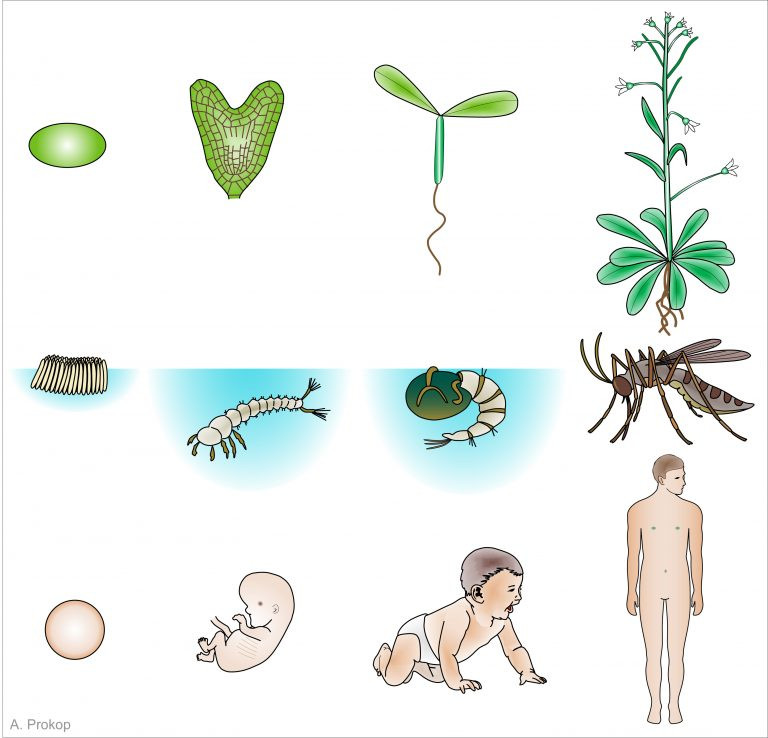
This module, Plant and Animal Developmental Biology, is designed for graduate students to provide a comprehensive understanding of the principles, mechanisms, and applications of developmental biology. It bridges foundational knowledge and advanced concepts, equipping students with the skills needed for research, teaching, and practical applications in the biological sciences.
The Plant Developmental Biology unit explores the plant life cycle, emphasising genetic, hormonal, and environmental regulation. Topics include seed germination, hormonal signalling, vascular development, and flower formation. Practical applications such as somatic embryogenesis and clonal propagation for crop improvement are highlighted, alongside methods to enhance plant productivity and adaptability.
The Animal Developmental Biology unit focuses on the processes of animal development, from gametogenesis to organogenesis. Students will learn about early embryogenesis, axis formation, tissue differentiation, and the roles of genetic, epigenetic, and environmental factors in shaping development. Practical applications include advancements in regenerative medicine and developmental biology research, with insights into molecular signaling pathways and tissue formation.
This module combines theoretical foundations with practical examples, featuring comprehensive explanations, illustrative figures, and exercises to help students connect developmental processes to real-world applications. It serves as a valuable resource for those pursuing careers in research, education, or applied sciences, integrating the latest discoveries to foster curiosity and innovation.
I hope this module supports your academic and professional growth in the fascinating field of developmental biology.
- Course creator, Lecturer: Solange Dr Nyiraguhirwa
- Lecturer: Patrick Dr. RUGWIRO
- Lecturer: Donatien MUTABAZI
- Lecturer: Jean Paul Niyonshuti
- Lecturer: JEAN PAUL NIYONSHUTI
- Lecturer: Fabien NSANZABERA
- Lecturer: Alexis USANGABANDI
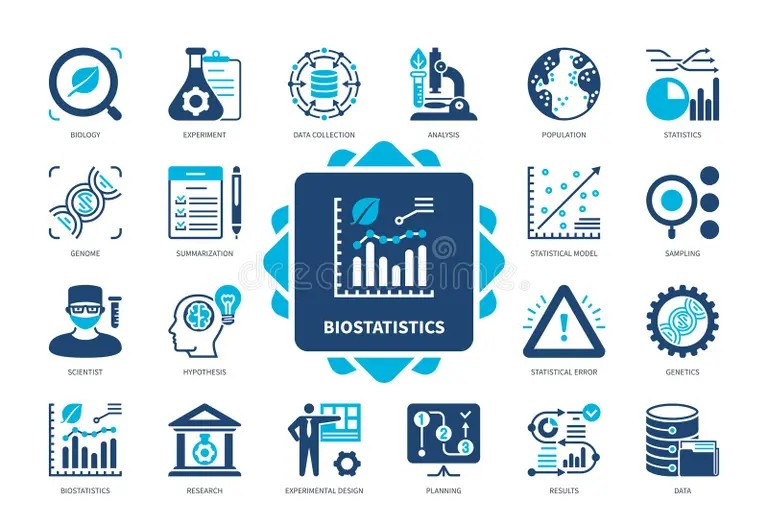
This module introduces the fundamental principles and applications of biostatistics, including data collection, classification, organisation, graphical presentation, descriptive statistics, probability, and probability distributions. It also covers sampling distributions, statistical estimation, confidence intervals, hypothesis testing, p-values, and statistical errors. Students develop the knowledge and practical skills needed to analyse, interpret, and draw evidence-based conclusions from biological and health-related data.
- Lecturer: BIGIRIMANA Dr. Joseph
- Lecturer: Jean Claude HARINDIMANA
- Lecturer: Jean De Dieu IRADUKUNDA
- Lecturer: JEAN PAUL NIYONSHUTI
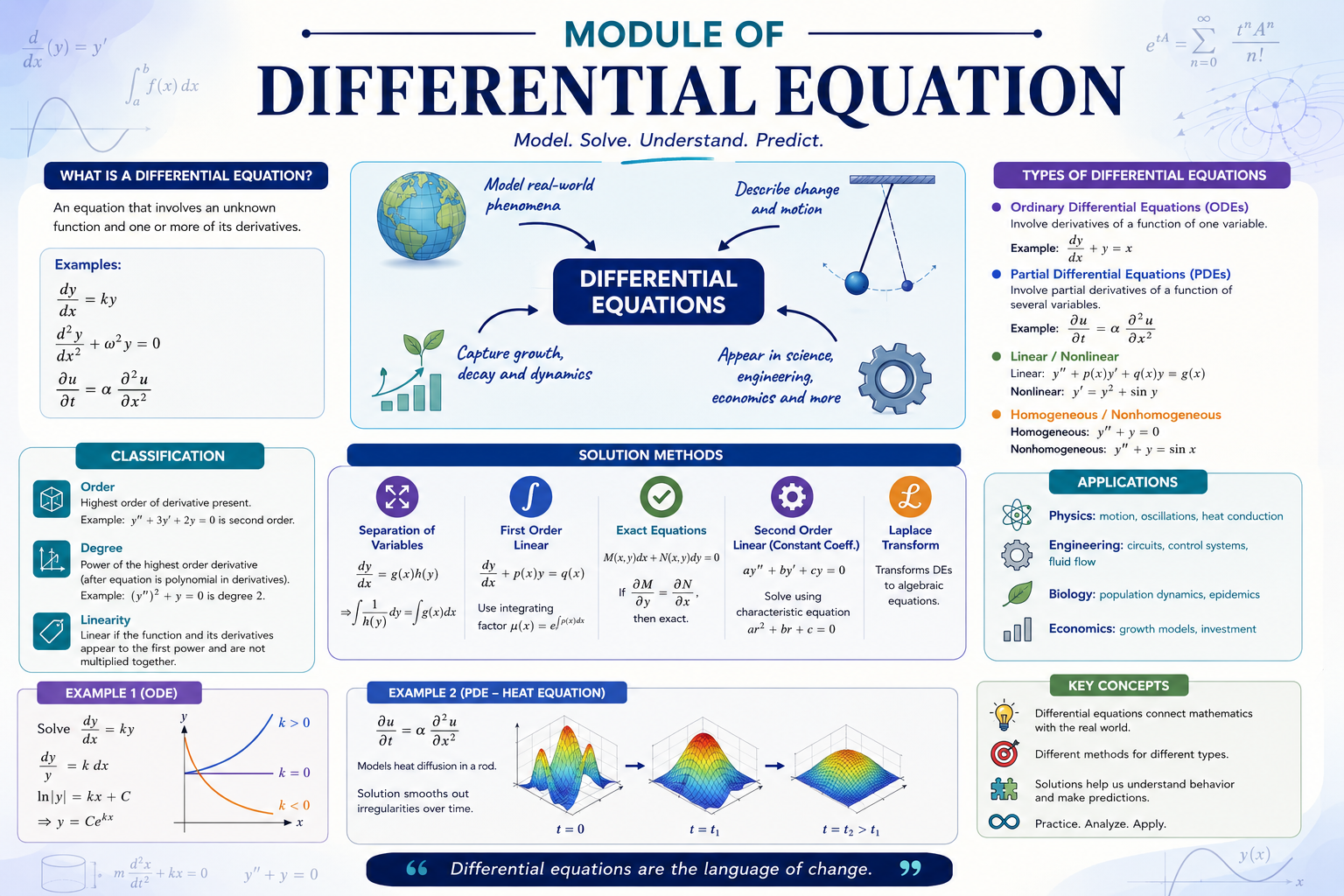
By the end of this module, the student teacher will be able to:
-Understand the basic types of differential equations (ordinary and partial).
-Classify differential equations by order, linearity, and separability.
-Solve first-order differential equations using standard techniques.
-Solve higher-order linear differential equations with constant coefficients.
-Apply methods for systems of differential equations.
-Use Laplace transforms to solve differential equations.
-Model real-world problems using differential equations.
-Interpret solutions graphically and analytically.
-Understand stability and behavior of solutions.
-Use numerical methods when analytical solutions are not possible.
- Lecturer: Olivier DUKUZIMANA
- Lecturer: Benjamin HAFASHIMANA
- Lecturer: Jean Claude HARINDIMANA
- Lecturer: Jean De Dieu IRADUKUNDA
- Lecturer: Valens Munyabugingo
- Lecturer: Josephine NISHIMWE
- Lecturer: DIDACE NIZEYIMANA
- Lecturer: Gabriel NSHIZIRUNGU